Close Menu
    What's Hot

    Ilhan Omar says 'bizarre' pre-dawn raid on her home is forcing her to move outThe congresswoman said federal agents seized over a dozen items, including cell phones and notebooks, as part of a federal investigation. 1 hr agoUS & Canada

    October 22, 2026

    How did AI discover the internet's massive cyber-security risk?The BBC's technology correspondent Joe Tidy explains how it happened, and what it means for you.1 hr agoTechnology

    October 22, 2026

    At least four dead after storm brings flooding to southern FranceThe deaths include two women found drowned in a cellar in the Bouches-du-Rhône region.1 hr agoEurope

    October 22, 2026
    Facebook X (Twitter) Instagram
    • Politics
    • Economy
    Facebook X (Twitter) Instagram
    Gulf News Week
    Subscribe
    Thursday, October 22
    • Home
    • Politics
      • Europe
      • Middle East
      • Russia
      • Social
      • Ukraine Conflict
      • US Politics
      • World
    • Region
      • Middle East News
    • World
    • Economy
      • Banking
      • Business
      • Markets
    • Real Estate
    • Science & Tech
      • AI & Tech
      • Climate
      • Computing
      • Science
      • Space Science
      • Tech
    • Sports

      Dominant PSG put Liverpool on the brink with 2-0 Champions League quarter-final first-leg win

      April 9, 2026

      Dubai Basketball U-18 Elite Crowned Basket Cup Sarajevo 2026 Champions in Historic Debut

      April 6, 2026

      Saudi boxing crowns 20 champions as Kingdom’s Elite Belt concludes in Riyadh

      April 4, 2026

      “He Signed for a Real Fight”: Pacquiao Contradicts Mayweather Over Rematch Status

      April 3, 2026

      Arsenal Hold Off Chelsea Fightback to Reach Women’s Champions League Semi-Finals

      April 2, 2026
    • Health
    • Travel
    • Contact
    Gulf News Week
    Home»Most Viewed News»Why a global outbreak of pneumonic plague is unlikelyThere are many reasons pneumonic plague is usually easily contained.
    Most Viewed News

    Why a global outbreak of pneumonic plague is unlikelyThere are many reasons pneumonic plague is usually easily contained.

    Gulf News WeekBy Gulf News WeekOctober 7, 2026No Comments6 Mins Read
    Share Facebook Twitter Pinterest Copy Link LinkedIn Tumblr Email VKontakte Telegram
    Why a global outbreak of pneumonic plague is unlikelyThere are many reasons pneumonic plague is usually easily contained.
    Share
    Facebook Twitter Pinterest Email Copy Link
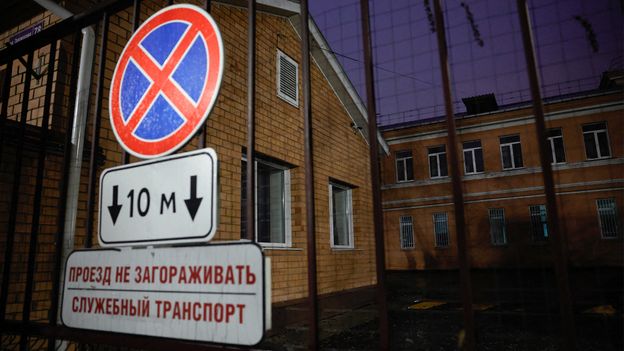
    Getty Images The entrance to the Anti-Plague Institute in Irkutsk, Russia (Credit: Getty Images)Getty Images
    (Credit: Getty Images)

    A Russian lab technician has died at a plague research centre in Siberia, but there are many reasons pneumonic plague is usually easily contained.

    It may seem eerily familiar.

    On Friday last week, a woman died from pneumonia of “undetermined” origin in Siberia after potentially being exposed to the plague. Russian media have reported that nearly 200 people were placed in isolation. Officials quickly shut down concern, but online speculation and alarm have been spreading. 

    The 28-year-old woman, named Darya Shipilova, worked at the Anti-Plague Institute in Siberia’s Irkutsk region. Unconfirmed reports suggested the woman fell ill with pneumonia-like symptoms either after breaking a test tube containing the plague bacterium, or following a field trip to the Buryatia region on the border with Mongolia. In this area, plague is endemic among wild animals. 

    The plague is caused by the bacterium Yersinia pestis. Clinically there are three forms: bubonic plague, pneumonic plague and septicaemic plague.

    The bubonic plague is the most common variant and is spread by the bites of infected fleas. Once inside a human host, the bacterium travels to the lymph nodes where it causes painful sores called ‘buboes’ in the groin, neck and armpits. Human-to-human transmission of bubonic plague is rare, but the bacterium can spread to the blood where it causes septicaemic plague, or the lungs, causing pneumonic plague.

    Unlike the other forms of plague, the pneumonic version can pass from person to person via tiny droplets released into the air when a person coughs or sneezes. Pneumonic plague is also usually fatal unless treated early, and the time from exposure to when symptoms begin can be as short as 24 hours.

    The Black Death, caused by bubonic and pneumonic plague, killed more than 25 million people in Europe in the 14th Century, wiping out between one third to two thirds of the population. It was made possible by newly opened trade routes, and the importing of goods such as grain and flour via ships.

    However, modern conditions are much less hospitable for the spread of the plague. 

    Firstly, while the pneumonic version of Yersinia pestis is nearly always fatal if left untreated, today it can be overcome with simple, widely available antibiotics. 

    “We have two treatments that work very well for bubonic plague,” says Piero Olliaro, professor of poverty-related infectious diseases at the University of Oxford.

    The bioterrorism threat

    Health authorities including the US Center for Disease Control and Prevention have plans for how to respond if the plague is released intentionally. This includes tracing contacts, providing guidance to hospitals, and sourcing medical supplies. The risk is considered low, but the plague has been used as a weapon before. Anecdotal reports suggest infected corpses were thrown at enemies in the 14th Century, and the Japanese military dropped infected fleas on Chinese civilians during World War Two. 

    In 2025, Olliaro and colleagues published the first ever randomised, controlled trial for the treatment of bubonic plague in Madagascar. It showed that two antibiotics – oral ciprofloxacin and injectable aminoglycoside – were 91% and 92% effective at treating bubonic plague, respectively. Even in the handful of cases where a person’s plague became pneumonic, 85% of people got better and survived with swift treatment. 

    Another reason that a plague pandemic is very unlikely is that, unlike the Covid-19 virus, pneumonic plague can only be spread after symptoms begin. This is usually within 24 hours. Symptoms are severe and obvious. This means that any further cases can be quickly identified, isolated and treated before transmission occurs.

    “It’s not something that we can miss, where we would see people getting on a plane and travelling around and seeing new infections everywhere ,” says Zania Stamataki, associate professor of viral immunology at the University of Birmingham. It would be quite obvious, quite quickly, she says. 

    According to the World Health Organisation, all the patients’ contacts have reportedly been identified and are being monitored, with none showing symptoms of illness currently. This action is in line with public health advice given by the US Center for Disease Control, which recommends identifying persons considered at risk so that they can be monitored, screened, quarantined and given antibiotics.


    Getty Images There have been three plague pandemics in human history (Credit: Getty Images)Getty Images
    There have been three plague pandemics in human history (Credit: Getty Images)

    Christian Lindmeier, spokesperson for the World Health Organisation, announced the organisation’s initial risk assessment on Tuesday. It’s “moderate to low for Irkutsk, a low risk for the Russian Federation as a whole and very low for the WHO European region”, he told reporters. 

    Generally speaking, transmission in a laboratory environment is an extremely rare event, as rigorous protocols are usually in place to prevent accidental exposure. “These are very specialised labs,” says Stamataki. “There are layers and layers of protection.”

    For instance, Stamataki explains that researchers wear full personal protection equipment (PPE). Samples are also only handled within biosafety cabinets. These safety cabinets are under negative air pressure, which means that the flow of air goes inwards and away from the user. “If a tube breaks, it would break inside the cabinet, and the user would be protected,” she says. 

    Even when you are transporting a tube, the tube is housed in a secondary containment vessel, explains Stamataki. Technicians also undergo vigorous training before working in such laboratories, she says.

    One of the main reasons that plague spread so rapidly in the 14th Century is the generally poor living conditions at that time. Waste and food scraps littered the streets, creating ideal nesting grounds for the black rats that carried the disease-bearing fleas. People lived in very close proximity to one another, and traders spent months in cramped ships. These conditions no longer exist for much of the world.

    More like this:

    • How bubonic plague rewired the human immune system

    • Leprosy: The ancient disease scientists can’t solve

    • A genetic quirk protects us from norovirus. Can vaccines help the rest of us?

    Nevertheless, it’s important to state that the plague isn’t just a historical disease. Plague is endemic in rodent populations in Africa, Asia, South America and even the US.

    Every year there are cases in humans too. In the US, for example, an average of seven human plague cases are reported each year. In some parts of the world, there are also sometimes local outbreaks where human to human transmission of pneumonic plague occurs.

    In 2017, an outbreak in Madagascar led to 2,417 cases of the plague and 209 deaths. However, Olliaro points out that the fact that this ended is evidence that plague outbreaks tend to be confined. They don’t usually lead to a pandemic. 

    However, while an outbreak of the plague is unlikely to achieve truly global spread, this doesn’t mean that we shouldn’t invest in treating and preventing plague.

    “It may not impact many people on the global scale, but it still causes suffering,” says Olliaro. “It is an important disease, and so we should not forget that plague exists.”

    —

    For trusted insights on health and wellbeing, sign up to the Health Fix newsletter by senior health correspondent Melissa Hogenboom who also writes the Live Well For Longer and Six Steps to Calm courses. 

    For more science, technology, environment and health stories from the BBC, follow us on Facebook and Instagram. 

    Health
    Outbreak
    Pandemic
    Infectious disease
    Science
    Features

    Share. Facebook Twitter Pinterest LinkedIn Tumblr Email Telegram Copy Link
    Gulf News Week

    Related Posts

    Most Viewed News

    Ilhan Omar says 'bizarre' pre-dawn raid on her home is forcing her to move outThe congresswoman said federal agents seized over a dozen items, including cell phones and notebooks, as part of a federal investigation. 1 hr agoUS & Canada

    October 22, 2026
    Most Viewed News

    How did AI discover the internet's massive cyber-security risk?The BBC's technology correspondent Joe Tidy explains how it happened, and what it means for you.1 hr agoTechnology

    October 22, 2026
    Most Viewed News

    At least four dead after storm brings flooding to southern FranceThe deaths include two women found drowned in a cellar in the Bouches-du-Rhône region.1 hr agoEurope

    October 22, 2026
    Most Viewed News

    Two European women held captive for more than a year in Niger freed in Libya The Swiss government told the BBC that the freed national was on her way back to Switzerland.27 mins agoAfrica

    October 22, 2026
    Most Viewed News

    Is the UK set to green-light a huge untapped oil field?Scotland editor James Cook visits Rosebank – the UK's largest known untapped oilfield – in the North Atlantic.4 hrs agoUK

    October 22, 2026
    Most Viewed News

    Celebrity shark guided out of South Korea canal refuses to swim out to seaBukangi the shark became an unlikely sensation after it was spotted in a canal in Busan weeks ago.35 mins agoAsia

    October 22, 2026
    Add A Comment
    Leave A Reply Cancel Reply

    Editors Picks

    Ilhan Omar says 'bizarre' pre-dawn raid on her home is forcing her to move outThe congresswoman said federal agents seized over a dozen items, including cell phones and notebooks, as part of a federal investigation. 1 hr agoUS & Canada

    October 22, 2026

    How did AI discover the internet's massive cyber-security risk?The BBC's technology correspondent Joe Tidy explains how it happened, and what it means for you.1 hr agoTechnology

    October 22, 2026

    At least four dead after storm brings flooding to southern FranceThe deaths include two women found drowned in a cellar in the Bouches-du-Rhône region.1 hr agoEurope

    October 22, 2026

    Two European women held captive for more than a year in Niger freed in Libya The Swiss government told the BBC that the freed national was on her way back to Switzerland.27 mins agoAfrica

    October 22, 2026
    Latest Posts

    Ilhan Omar says 'bizarre' pre-dawn raid on her home is forcing her to move outThe congresswoman said federal agents seized over a dozen items, including cell phones and notebooks, as part of a federal investigation. 1 hr agoUS & Canada

    October 22, 2026

    How did AI discover the internet's massive cyber-security risk?The BBC's technology correspondent Joe Tidy explains how it happened, and what it means for you.1 hr agoTechnology

    October 22, 2026

    At least four dead after storm brings flooding to southern FranceThe deaths include two women found drowned in a cellar in the Bouches-du-Rhône region.1 hr agoEurope

    October 22, 2026

    Subscribe to News

    Get the latest sports news from NewsSite about world, sports and politics.

    Advertisement
    Demo
    Gulf News Week

    Your source for the serious news. This demo is crafted specifically to exhibit the use of the theme as a news site. Visit our main page for more demos.

    We're social. Connect with us:

    Facebook X (Twitter) Instagram Pinterest YouTube
    Latest Posts

    Ilhan Omar says 'bizarre' pre-dawn raid on her home is forcing her to move outThe congresswoman said federal agents seized over a dozen items, including cell phones and notebooks, as part of a federal investigation. 1 hr agoUS & Canada

    October 22, 2026

    How did AI discover the internet's massive cyber-security risk?The BBC's technology correspondent Joe Tidy explains how it happened, and what it means for you.1 hr agoTechnology

    October 22, 2026

    At least four dead after storm brings flooding to southern FranceThe deaths include two women found drowned in a cellar in the Bouches-du-Rhône region.1 hr agoEurope

    October 22, 2026

    Subscribe to Updates

    Get the latest creative news from FooBar about art, design and business.

    © 2026 Gulf News Week. Designed by HAM Digital Media.
    • Home
    • Politics
    • Economy
    • Sports

    Type above and press Enter to search. Press Esc to cancel.