
A Houthi attack damaged Riyadh’s tallest skyscraper, which houses Saudi Arabia’s sovereign wealth fund, on Thursday, striking a prominent financial landmark as fighting between the kingdom and Yemen’s Iran-aligned group intensified.
Saudi Civil Defence said several floors of a tower in the King Abdullah Financial District and neighbouring buildings sustained material damage. No injuries were reported, and emergency teams implemented safety procedures to protect occupants and surrounding properties.
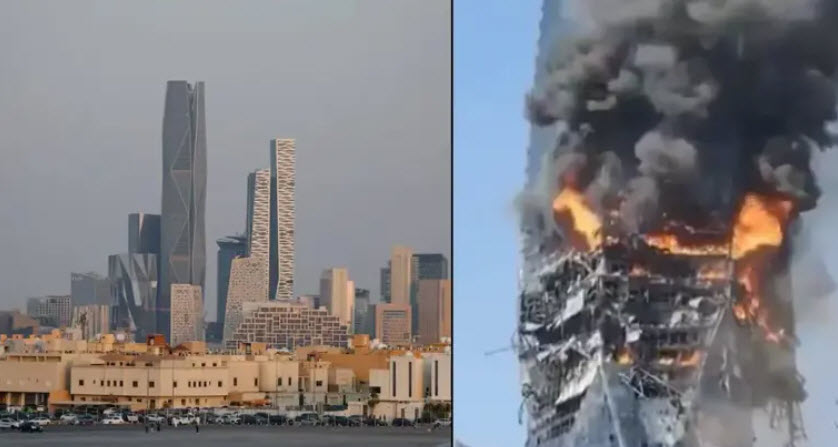
The civil defence statement did not name the building, but an accompanying official photograph showed the Public Investment Fund (PIF) Tower, the 80-storey headquarters of the sovereign wealth fund. Photographs of the aftermath showed broken windows across multiple floors and damage to sections of the exterior facade.
The attack placed one of the capital’s most recognisable corporate buildings at the centre of renewed hostilities. PIF is a principal vehicle for Crown Prince Mohammed bin Salman’s economic diversification programme, financing investments and development projects inside Saudi Arabia and abroad.
Saudi Arabia’s Foreign Ministry condemned what it called continuing Houthi attacks on civilian and economic facilities in Riyadh. It asserted the kingdom’s right to defend its sovereignty, national assets and residents, while stating that any measures would conform to international law.
The ministry urged the international community, particularly permanent members of the United Nations Security Council, to condemn the attacks and implement applicable council resolutions. It characterised the Houthis’ operations as a threat to regional and international security.
The Saudi-led coalition separately said it had dealt with a missile threat directed towards Riyadh and that falling debris caused damage. Its announcement did not establish whether the projectile struck the PIF building directly or whether the damage resulted from falling fragments.
The Houthis said they targeted Riyadh’s financial district twice on Thursday, at dawn and again in the evening. The group also claimed attacks on King Khalid International Airport, an airbase at Khamis Mushait and the SADAF petrochemical facility in Jubail. Saudi authorities had not independently confirmed those additional claims.
Residents reported hearing a loud explosion during the early hours. Saudi Civil Defence issued alerts about possible danger in Riyadh and nearby Al-Kharj before subsequently declaring that the immediate threat had passed. Access to the financial district was restricted following the strike.
The impact was the second reported attack affecting a major building in the district within less than two weeks. On 8 November, a Houthi attack caused minor damage to a building associated with state energy company Saudi Aramco. Saudi authorities attributed that damage to fragments from an intercepted missile.
Thursday’s strike underscored the vulnerability of high-profile commercial infrastructure as Saudi forces and Houthi fighters exchanged attacks across the border. The group’s campaign has included launches towards airports, energy sites and population centres, while Saudi-led forces have conducted military operations against Houthi positions in Yemen.
The Saudi-led coalition entered Yemen’s civil war in 2015 in support of the internationally recognised government after the Houthis took control of Sanaa. A ceasefire established in 2022 had largely held until the fighting resumed this summer. The renewed clashes have also affected areas around the Red Sea coast, where advances by Houthi forces have complicated the position of Saudi-backed units and heightened concern about the security of maritime routes.
The renewed confrontation followed the breakdown of the relative calm that had prevailed in Yemen. Hostilities escalated again in July against the backdrop of the wider conflict involving Iran, with Houthi advances on the ground adding pressure on Saudi-backed forces.
The deteriorating security situation has increased attention on Riyadh’s defence arrangements. Crown Prince Mohammed bin Salman met Admiral Brad Cooper, commander of United States Central Command, in Riyadh this week. Saudi official accounts said their discussions covered military cooperation and regional security developments.
Cooper also met Defence Minister Prince Khalid bin Salman to discuss cooperation and efforts to maintain stability. The meetings took place as attacks on the Saudi capital raised questions about the protection of strategically important civilian infrastructure.
The 385-metre PIF Tower stands within King Abdullah Financial District, a commercial centre housing major financial institutions, corporate offices and other business premises. Its glass exterior and distinctive angular framework make it prominent on Riyadh’s skyline. Authorities did not announce a timetable for repairing the damaged floors.

Related Posts
Add A Comment